Product Introduction
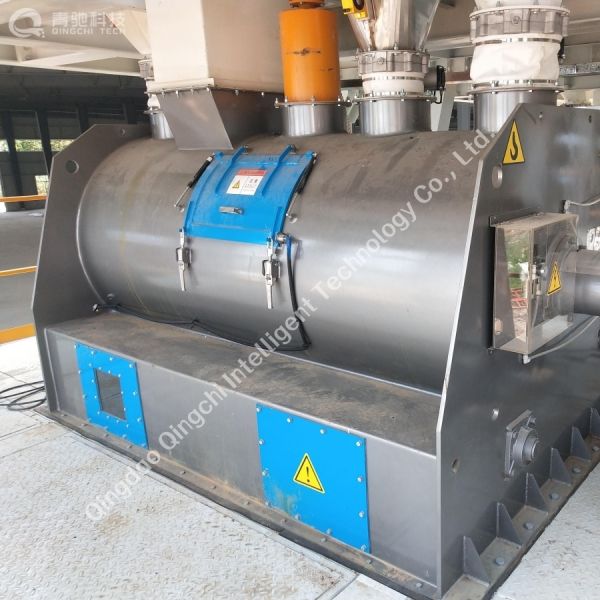
Dry Mortar Mixer is the core mixing equipment for dry‑mix mortar production lines. It is specially designed for dry powder and granular building materials. The machine mixes cement, quartz sand, fly ash, rubber powder, fibers and chemical additives through forced mechanical agitation to produce qualified finished dry mortar.
Adopting mainstream horizontal double‑shaft non‑gravity mixing structure, it can work with batching and discharging modules for integrated operation. It solves the defects of traditional manual mixing such as unstable proportion, poor homogeneity, heavy dust and low efficiency. Suitable for small‑medium batch production and large‑scale automatic production lines. It delivers stable quality and high batch consistency. Finished mortar can be packed in bags for storage or direct on‑site construction. It is widely used in building materials, thermal insulation and decoration industries.
Core Highlights
- Superior mixing homogeneity with zero dead zones Adopt double‑shaft counter‑rotating plough‑blade mixing structure. Materials realize multi‑dimensional convection, diffusion and shearing movement inside the chamber. Mixing homogeneity reaches ≥99% with low coefficient of variation. Trace additives can be well dispersed to guarantee mortar strength and bonding performance, avoiding batch‑to‑batch quality difference.
- High efficiency & energy‑saving, large production capacity Optimized chamber and rotating speed design. One mixing cycle takes only 3‑5 minutes for continuous cyclic operation. Hourly output ranges from 3‑30 tons. Equipped with high‑efficiency copper‑wound motor. Power matching is reasonable, energy consumption is 15%‑20% lower than conventional mixers to support mass production.
- Low residual rate, no cross‑contamination Arc seamless chamber with wear‑resistant anti‑corrosion lining. Material adhesion is low and complete discharging is achieved. Material residual rate ≤0.5%. Quick cleaning for formula change. Suitable for frequent switching among different ordinary and special mortar formulas.
- Robust structure & low maintenance Key components including main shaft, bearing and mixing blades are made of high‑strength wear‑resistant materials for long‑time heavy‑duty dry‑material operation. Upgraded sealing prevents dust ingress and bearing jam. Low failure rate for 24‑hour continuous running and reduces later maintenance cost.
- Intelligent control & easy operation Match intelligent electric control system. Support automatic batching, timing mixing, accurate discharging and fault alarm. Batching accuracy: aggregate ±1%, fine additives ±0.5%. Simple operation. Only 2‑4 operators are required without highly‑skilled technicians.
- Compact modular design & wide compatibility Modular compact layout requires little foundation work and small floor space. Compatible with simple semi‑automatic lines and tower‑type full‑automatic production lines. Applicable for factory workshops and temporary on‑site production with fast commissioning.
Specification Parameters
| Item |
Specification |
| Model |
WZ Series Non‑gravity Dry Mortar Mixer |
| Effective batch volume |
0.5m³‑3m³ (0.8‑5 tons per batch) |
| Hourly output |
3‑30 t/h (depends on model) |
| Mixing motor power |
11kW‑55kW |
| Mixing cycle |
3‑5 min per batch |
| Mixing homogeneity |
≥99% |
| Material residual rate |
≤0.5% |
| Batching accuracy |
Aggregate ±1%; Fine additives ±0.5% |
| Working mode |
Intermittent automatic / semi‑automatic |
| Applicable materials |
Dry powder, fine particles, short‑fiber dry materials |
| Material of construction |
Carbon steel main body + wear‑resistant anti‑corrosion lining |
| Noise level |
≤75dB |
Note: Customized specifications are available upon production‑line requirements.
Operation Notes
- Pre‑start‑up inspection Check fasteners, mixing blades, bearings and seals for looseness or wear. Inspect electric circuit and emergency‑stop switch. Ensure dust‑removal system works normally. Remove metal and foreign objects inside chamber. Never start with loaded chamber to avoid overload damage.
- Feeding requirements Feed main raw materials such as aggregate and cement first, then add rubber powder, fiber and chemical additives. Do not dump sticky or caking materials in one batch. Strictly prohibit metal blocks and hard debris from entering the chamber. Do not exceed rated volume to prevent overload and insufficient mixing.
- Running supervision Keep hands and tools away from mixing chamber during operation; do not open access doors. Stop immediately and cut off power if abnormal noise, vibration or over‑heating occurs. Do not run under faulty conditions. Keep dust‑collecting system running for dust control.
- Shutdown, cleaning & maintenance Fully discharge materials after each batch. Clean powder residues on chamber and blades to avoid caking. Lubricate bearings and transmission parts periodically. Replace worn seals and spare parts timely. Cut off power and apply anti‑rust protection for long‑term shutdown.
- Safety requirements Operators shall receive training and wear dust‑proof masks and protective gloves. Reliable equipment earthing is required against electric leakage. Keep workshop ventilated and dry, away from flammable‑explosive goods. Do not modify equipment structure or remove safety guards.
- Formula switching Fully clean internal residues before switching to different mortar formulas to avoid cross‑contamination.
Application Scenarios
- General construction mortar production Producing masonry mortar, internal & external plastering mortar, floor screeding mortar, waterproof mortar, anti‑crack mortar for building material plants.
- Thermal‑insulation system mortar Thermal insulation bonding mortar, base‑coat render mortar, anti‑crack mortar for external wall insulation projects.
- Decorative dry‑mix materials Wall putty powder, tile adhesive, dry grout, gypsum plaster, dry floor materials and dry powder coatings.
- Special functional dry materials Fiber‑reinforced mortar, wear‑resistant floor mortar, repair mortar, self‑leveling compound and leak‑stopping dry powder.
- Production‑line matching Fit for large‑scale tower‑type automatic dry mortar plants, small‑medium simple production lines and temporary on‑site production for civil buildings, municipal works and decoration projects.
FAQ
Q1: What is the difference between dry mortar mixer and ordinary concrete mixer? A1: Dry mortar mixer is designed for dry powder and fine‑particle materials. It features high mixing precision and low residual rate for uniform dispersion of trace additives and fibers. Ordinary concrete mixers are for wet concrete with large stones. Their mixing accuracy is insufficient for dry‑mix mortar production and cannot be used interchangeably.
Q2: Why is mixing uneven with color difference and inconsistent batches? A2: Possible causes: incorrect feeding sequence, insufficient mixing time, worn mixing blades, residual old materials inside chamber, over‑loading. Solutions: follow feeding procedure, keep standard mixing time of 3‑5 minutes, inspect and replace worn parts, clean residues and avoid over‑feeding.
Q3: How to handle abnormal noise and heavy vibration during operation? A3: Shut down and cut off power for inspection immediately. Common reasons: foreign metal objects inside chamber, loose blade bolts, bearing wear or insufficient lubrication, loose anchor bolts. Remove debris, tighten fasteners, lubricate or replace bearings and level the machine. Never run with faults.
Q4: High material residue and incomplete discharging, what to do? A4: Standard residual rate ≤0.5%. Excessive residue is usually caused by internal caking, worn lining or blocked discharge port. Clean chamber after each batch; replace severely worn lining and seals.
Q5: Can one mixer produce multiple types of mortar? A5: Yes. It supports ordinary mortar, insulation mortar, tile adhesive, putty powder and other dry materials. Complete cleaning is mandatory before formula switching to prevent cross‑contamination.
Q6: What is the maintenance cycle and routine work? A6: Daily: clean residues, check circuits and components. Weekly: inspect bearings, transmission and seals, apply lubricant. Monthly: tighten bolts, inspect motor and dust‑removal unit. Quarterly: full overhaul of mixing components and replace aging spare parts.
Q7: Low output and high power consumption? A7: Caused by improper feeding, wrong mixing cycle, loose transmission belt, motor aging or internal material caking. Optimize feeding volume and mixing time; maintain transmission system and clear accumulated materials.


